A rooftop solar system needs very little upkeep — but skipping the basics quietly costs output, month after month.
Solar panels have no moving parts, which is why people assume they need no care at all. In Indian conditions — dust, construction debris, bird droppings, monsoon humidity and summer heat — a few simple habits make a measurable difference to generation and to how long the system lasts. This is a practical checklist for homeowners and EPCs, organised by frequency, with safe cleaning steps, a troubleshooting table and what a good maintenance contract should include.
Key points
- Check generation weekly in the inverter app; it's the earliest warning of dirt, shade or faults.
- Clean every 2–4 weeks in dry seasons (more often in very dusty areas), early morning or evening, with soft water and a soft brush.
- Never walk on panels, use detergents or pressure washers, or spray water on the inverter and junction boxes.
- Get a full electrical and structural inspection by a qualified technician every year, ideally before the monsoon.
The checklist at a glance
| Task | Frequency | Who |
|---|---|---|
| Check generation in the app | Weekly | Owner |
| Panel cleaning | Every 2–4 weeks (weekly in very dusty areas) | Owner or cleaning service |
| Visual check of panels and structure | Monthly | Owner |
| Bird-proofing and debris check | Monthly | Owner |
| Full electrical and structural inspection | Annual, before monsoon | EPC or qualified technician |
“Dust costs a noticeable share of output long before the panels look dirty.”
How to clean panels safely
- Time it right — early morning or evening, when panels are cool. Cold water on hot glass can stress it.
- Use soft water — hard water leaves mineral spots that act like dust.
- Use a soft brush or mop on a long handle; never abrasive pads.
- No detergents or high-pressure jets — they can damage coatings and seals.
- Never stand or walk on panels — it causes micro-cracks that cut output for years.
- Keep water away from the inverter, junction boxes and connectors.
- Stay safe on the roof — don't lean over parapets, and avoid cleaning on wet, slippery surfaces.
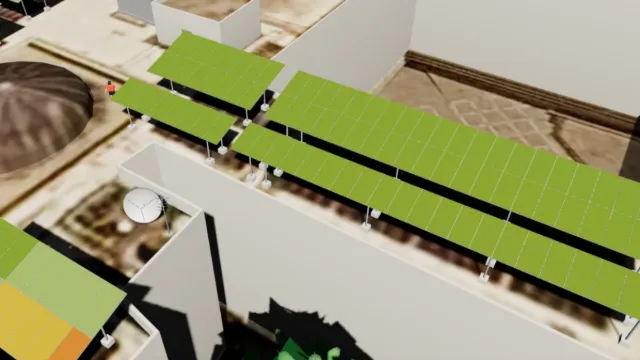
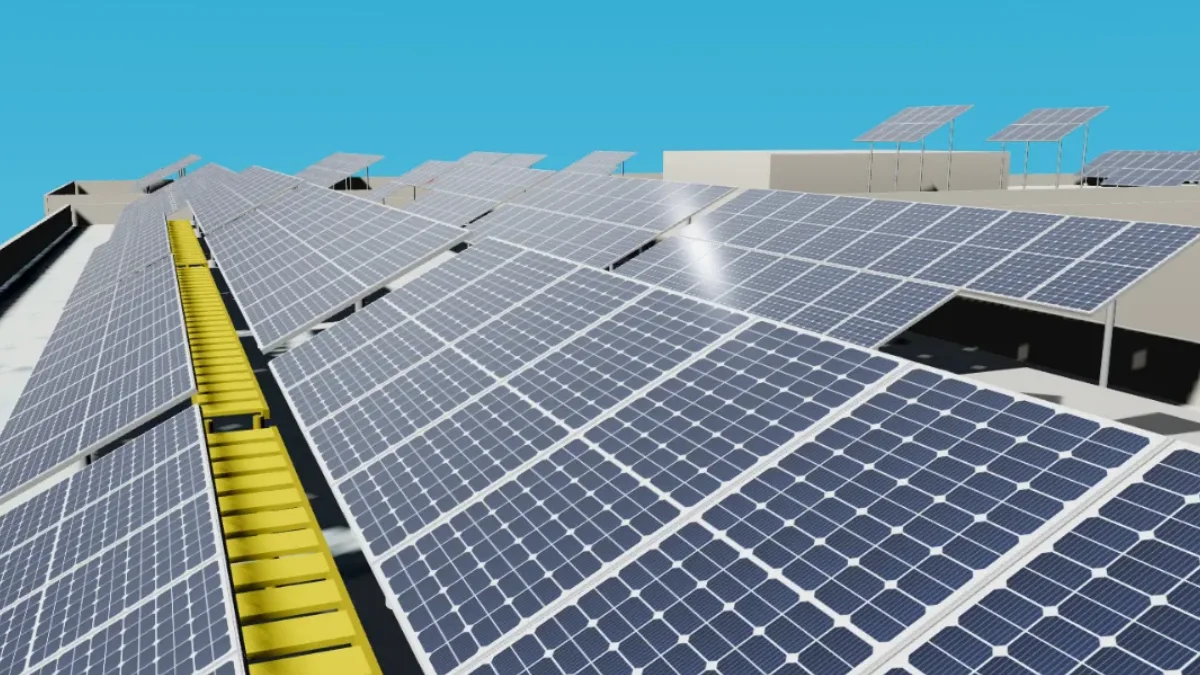
Cleaning is easier when the system was designed with walkways between rows. EPCs plan these in the 3D layout — you can see a maintenance walkway in our 3D design samples.
What you need
- A soft brush or sponge mop on an extendable handle.
- A bucket or hose with soft water; a squeegee for streaks.
- Non-slip footwear, and gloves for bird droppings.
Weekly: watch the numbers
Your inverter app is the best early-warning system. Compare this week with last week and this month with the same month last year. A sudden drop usually means a fault or new shading; a gradual drop usually means dirt. Some loss over years is normal — see degradation explained.
A rough benchmark: in most of India, a clean, unshaded system produces around 4 units per kW per day averaged across the year, higher in spring and lower in the monsoon. Track your own system against its own history rather than a single number.
Monthly: a quick look
- Bird droppings, leaves or debris on panels.
- New shade from a growing tree, a neighbour's new floor or a dish antenna — see rooftop shading.
- Loose or sagging cables, and rust on the structure.
- Error lights or messages on the inverter.
Annually, before the monsoon
- Tighten structure bolts and check for corrosion, especially near the coast.
- Inspect cables, connectors and conduits for damage or chewing by rodents.
- Test earthing and check surge protection devices in the AC and DC boxes.
- Clean inverter vents and make sure it has shade and airflow.
- Check roof waterproofing around structure mounts.
Electrical checks should be done by your EPC or a qualified technician, not by the homeowner.
Troubleshooting: what the numbers are telling you
| What you see | Likely cause | What to do |
|---|---|---|
| Output falls slowly over a few weeks | Dust or soiling | Clean the panels and compare again |
| Sudden drop on a sunny day | Fault, tripped breaker or loose connection | Check the inverter for errors; call the EPC |
| Zero output during a power cut | Normal on-grid safety shutdown | Nothing — it restarts when the grid returns |
| Lower output every afternoon | New shade or heat | Look for new obstacles; check airflow |
| Inverter restarting often | Grid voltage issues or inverter fault | Note the error codes; call the EPC |
| Brown marks near connectors | Overheating connection | Stop and call the EPC immediately |
Cleaning needs differ by location
- Dry, dusty regions such as Rajasthan and parts of Gujarat may need weekly cleaning in the dry months.
- Near highways, construction or industry, soot and fine dust build up fast; clean more often.
- Coastal areas see salt deposits; rinse with fresh water and check the structure for corrosion.
- During the monsoon, rain does some of the work, but check for algae and leaf build-up at panel edges.
The right frequency is whatever keeps generation steady; let your inverter app tell you.
Birds and pests
Pigeons often nest under panels, leaving droppings and damaging cables. Bird-proofing mesh around the array edges is a cheap, effective fix. Rodents can chew exposed cables, so keep cables in conduits or trays and check them during the annual inspection.
Maintenance contracts
Many EPCs offer an annual maintenance contract (AMC) with periodic cleaning and inspections. For subsidised systems, check what maintenance your vendor provides in the first years under the scheme. A good contract lists:
- Number of cleaning and inspection visits per year.
- What is checked on each visit, with a short report.
- Response time for breakdowns.
- What is included and what is charged extra.
Our warranty guide explains how maintenance and warranties work together — careless cleaning or unauthorised electrical work can affect warranty claims.
“Ten minutes a week with the app and a bucket protects 25 years of generation.”
A dusty or shaded panel behaves a lot like a poorly designed one. Maintenance plans can be added as a line item in your solar proposals. To understand how long a well-kept system lasts, read how long solar panels actually last.
FAQ
Does rain clean the panels?
Partly. Monsoon rain removes loose dust but not bird droppings or caked dirt, and dry months need regular cleaning.
Can I use a pressure washer?
No. High pressure can damage seals and coatings and void warranties.
How much water does cleaning need?
Not much — a bucket or a gentle hose rinse per few panels is usually enough. Soft water gives the best result.
Is professional cleaning worth it?
For large or hard-to-reach roofs, yes. For a small, safely accessible home system, regular careful cleaning by the owner works well.