Upfront cost is the biggest objection EPCs hear. Knowing the financing options — and presenting them clearly — is often what turns “not now” into a signed order.
A rooftop system pays for itself in a few years, but the customer still has to find the money on day one, and under PM Surya Ghar the subsidy only arrives after commissioning. For many families and small businesses, the question isn't “is solar worth it?” but “how do I pay for it?”. This guide covers the main financing routes in India, how they compare, a worked example of EMI against bill savings, and how EPCs can present finance in a proposal.
Key points
- The PM Surya Ghar subsidy (up to ₹78,000) lowers the final cost but arrives after commissioning, so the full price must be funded first.
- Bank solar loans are usually the cheapest borrowing route for homeowners; concessional, collateral-free loans are available for small residential systems under the scheme.
- Compare options on total cost of borrowing, not just the EMI, and check whether the subsidy can be used to prepay.
- When the monthly bill saving is close to the EMI, the system effectively pays for itself from the first month.
Common routes
- PM Surya Ghar subsidy — reduces the net cost for residential customers.
- Solar loans — offered by public sector and private banks.
- Home loan top-up — for existing home-loan customers.
- EMI via the installer — some EPCs tie up with NBFCs directly.
- Business options — capex, loans, leasing or third-party ownership.
The subsidy
For residential customers, the PM Surya Ghar subsidy of up to ₹78,000 is the starting point. It's paid into the homeowner's bank account after commissioning, so it reduces the final cost but not the cash needed upfront. Many families use a short-term loan or savings to bridge that gap.
Bank solar loans
Public sector and private banks offer loans for rooftop solar. Under PM Surya Ghar, concessional and collateral-free loans are available for small residential systems; check the current interest rate, tenure and documentation with the bank, as these change. Bank loans are usually the cheapest borrowing option for homeowners.
Home loan top-up
Homeowners with an existing home loan can sometimes add the system cost as a top-up at home-loan rates. It's worth asking the current lender, especially for larger systems.
NBFC and installer EMI
Some EPCs partner with NBFCs or fintech lenders to offer EMIs at the point of sale. Approval is often faster and paperwork lighter, but rates can be higher than bank loans. Compare the total cost, including processing fees.
Options for businesses
Commercial customers can buy outright (capex), take a loan, lease the equipment, or use a third-party model where a developer owns the system and sells the power under a long-term agreement. Businesses that buy may benefit from tax provisions such as accelerated depreciation; their accountant can confirm. See commercial vs residential solar.
“A customer who can't pay ₹1.5 lakh upfront can often afford ₹2,500 a month — the sale is the same, just structured differently.”
The options compared
| Route | Typical tenure | Good for | Watch out for |
|---|---|---|---|
| Subsidy | One-time | Every eligible residential customer | Arrives after commissioning |
| Bank solar loan | 3–7 years | Lowest borrowing cost for homeowners | Documentation and approval time |
| Home loan top-up | Linked to the home loan | Existing home-loan customers | Long tenure means more total interest |
| NBFC / installer EMI | 1–5 years | Fast approval, minimal paperwork | Higher rates and fees |
| Third-party ownership | Long-term agreement | Businesses wanting no upfront cost | Contract terms and exit clauses |
A worked example: EMI vs bill savings
Here is an illustrative calculation for a 3 kW home system. The price, interest rate and tariff are assumptions for the example; use real quotes and your own tariff for an actual decision.
| Item | Example value |
|---|---|
| Loan amount | ₹1,50,000 |
| Interest rate (assumed) | 7% a year |
| Tenure | 5 years |
| Monthly EMI | about ₹2,970 |
| Solar generation (3 kW × ~120 units) | about 360 units a month |
| Tariff (assumed) | ₹7 per unit |
| Monthly bill saving | about ₹2,520 |
In this example, the bill saving covers most of the EMI from the first month. If the subsidy is used to prepay part of the loan when it arrives, the EMI or tenure falls further, and once the loan is repaid the full saving stays in the customer's pocket for the rest of the system's life. The free solar loan EMI calculator runs this for any amount, rate and tenure.
How to compare options
- Total cost of borrowing — interest plus processing and other fees, not just the monthly EMI.
- EMI vs savings — if the monthly saving on the bill is close to the EMI, the system effectively pays for itself from the first month.
- Prepayment — can the subsidy be used to prepay part of the loan without a penalty?
- Paperwork and speed — a slow approval can delay installation and the subsidy.
- Disbursement timing — does the lender pay the installer in stages that match the project?
Documents lenders usually ask for
- Identity and address proof, and recent bank statements.
- Income proof — salary slips or business returns.
- Property documents and the latest electricity bill.
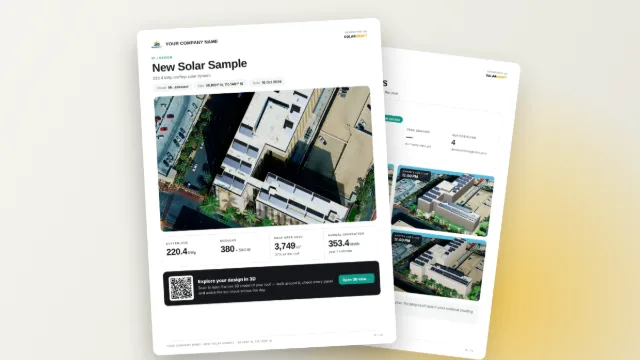
- The installer's quotation or proposal with the system details.
A clean, itemised proposal from the EPC speeds up loan approval, because the lender can see exactly what is being financed.
Presenting finance in a proposal
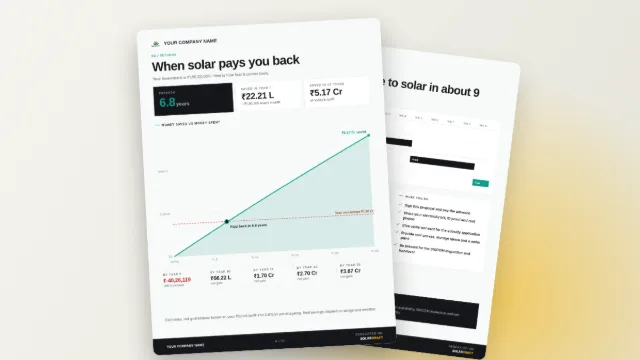
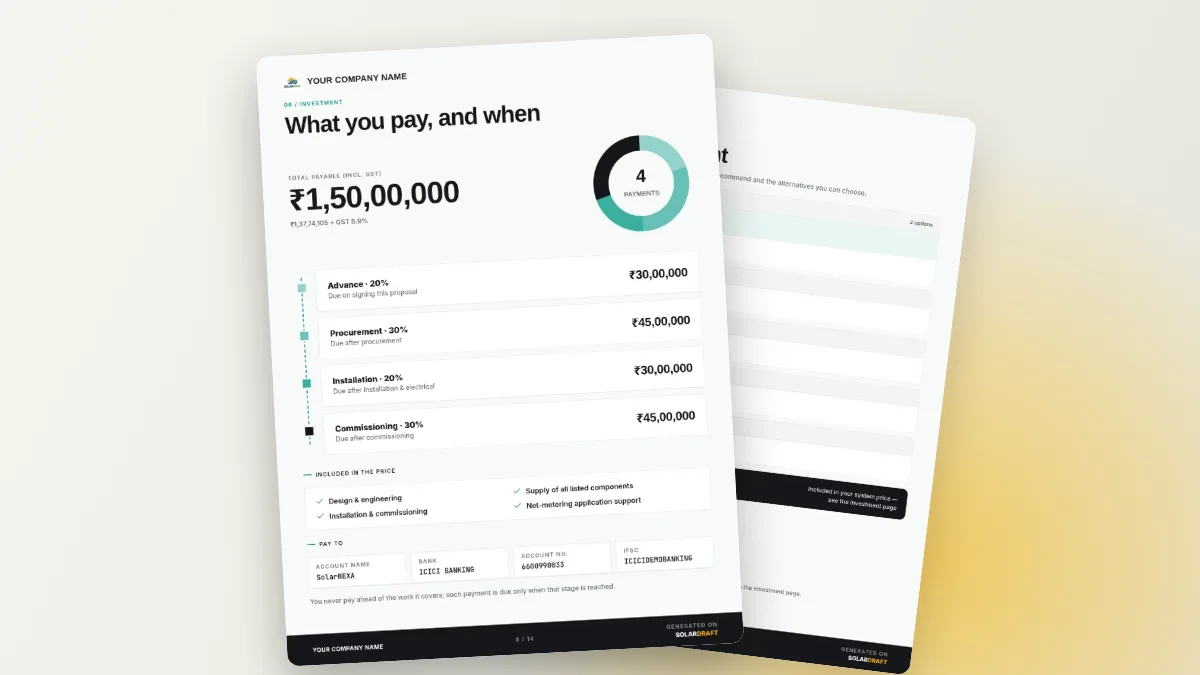
Customers decide faster when they see the full picture on one page: gross price, subsidy, net cost, and what a loan would mean month by month next to the expected bill savings. A clear payment schedule by project stage — advance, material delivery, installation and commissioning — avoids misunderstandings. SolarDraft proposals include a payment schedule page; see it in the proposal samples or the sample proposal PDF.
“Don't sell a price. Sell a monthly number the customer can compare with the bill they already pay.”
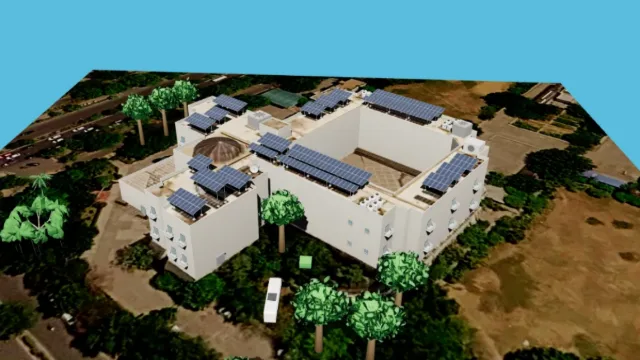
Every financing conversation starts with an accurate payback estimate and the confirmed subsidy amount. Both depend on sizing the system correctly.
FAQ
Can I get a loan without collateral?
For small residential systems under PM Surya Ghar, collateral-free loans are available through banks. Larger loans may need security.
Should I take a loan or pay cash?
If you have the cash and no higher-return use for it, paying upfront saves interest. If not, a loan with an EMI close to your monthly savings is a sensible way to start saving immediately.
Can the subsidy be used to repay the loan?
Often yes, if the loan allows prepayment without a heavy penalty. Check the terms before you sign.
Do businesses get the PM Surya Ghar subsidy?
No, it is for residential households. Businesses usually rely on bill savings, loans or third-party models, and possible tax benefits.