The short answer: it depends on your electricity use, not the size of your roof. A useful rule of thumb — 1 kW of solar needs about 100 sq. ft of shadow-free roof and produces roughly 120–150 units a month in most parts of India.
That rule gets you into the right range, but the real number depends on how much power you use, the panels you choose, which way your roof faces, what casts shade on it and what your DISCOM allows. This guide shows how to estimate your system size from your bills, how many panels that means with today's panels, how much roof you need, and why the final answer should come from a design of your actual roof.
Key points
- Size from your average monthly units over a full year: units ÷ 120 gives a conservative system size in kW for most of India.
- With today's ~540–550 W panels, a 3 kW system is about 6 panels and roughly 300 sq. ft of shadow-free roof.
- Shading, orientation, sanctioned load and the PM Surya Ghar subsidy cap all change the final number.
- A 3D design of the real roof turns the estimate into a layout you can actually install.
Step 1: start from your bills
Look at your last 12 electricity bills and note the units (kWh) consumed each month. Average them, because usage swings between summer and winter. Then divide by the generation of 1 kW in a month:
- Average use: 360 units a month.
- 1 kW produces about 120 units a month (a conservative figure for most of India).
- System size: 360 ÷ 120 = 3 kW.
The free solar size calculator does this for you. If you only have a few bills, use months from different seasons rather than only summer.
Quick sizing table
| Average monthly units | Suggested system size | Typical household |
|---|---|---|
| Up to 150 | 1–1.5 kW | Small home, fans and lights |
| 150–300 | 2–2.5 kW | Home with a fridge, TV and occasional AC |
| 300–450 | 3–4 kW | Family home with one or two ACs |
| 450–700 | 4–6 kW | Larger home with several ACs |
| 700+ | 6 kW and above | Large homes, home offices, small businesses |
These are starting points at about 120 units per kW a month. Sunnier regions may need a little less capacity; cloudier or shaded sites a little more.
Step 2: convert kW to panels
Divide the system size by the panel wattage. Most rooftop panels sold in India today are around 540–550 W; older systems used 330–400 W panels, which is why older guides quote higher panel counts.
| System size | Panels at ~545 W | Panels at ~400 W | Shadow-free roof (approx.) |
|---|---|---|---|
| 2 kW | 4 | 5 | ~200 sq. ft |
| 3 kW | 6 | 8 | ~300 sq. ft |
| 5 kW | 9–10 | 13 | ~500 sq. ft |
| 10 kW | 18–19 | 25 | ~1,000 sq. ft |
Roof area includes walkways for cleaning and maintenance, not just the panels themselves. A single 540–550 W panel is roughly 2.3 m long and 1.1 m wide, so its footprint alone is about 27–28 sq. ft.
Step 3: check the roof
Now check whether that many panels actually fit on the usable part of the roof. Subtract staircase rooms, water tanks, solar water heaters and setbacks from parapets. Leave a walkway so every panel can be cleaned. On many Indian terraces, an elevated structure lifts the panels clear of parapet shadows and keeps the space below usable.
Step 4: check the shade
Trees, tanks and neighbouring walls cut usable roof area, especially in winter when the sun is low in the southern sky. A panel that sits in shade for part of the day produces far less than the rule of thumb suggests, and in a string it can drag down its neighbours too. More on that in Rooftop Shading: The Silent Killer of Solar Output.
“Size the system to the bill. Then let the roof and the shade tell you whether it fits.”
What actually decides the number
- Average monthly use — higher usage needs a bigger system to offset it.
- Panel wattage — a 540 W panel needs less roof space than an older 330 W panel for the same output. See panel types compared.
- Location — sunnier regions produce more units per kW than cloudier ones.
- Roof orientation and tilt — south-facing arrays in India generally generate the most.
- Shading — reduces both usable area and output.
- Sanctioned load — many DISCOMs limit the system size to your sanctioned load, so a load increase may be needed for a bigger system.
- Subsidy — under PM Surya Ghar, the residential subsidy is capped at 3 kW, which is why many homes choose 3 kW.
Two identical-looking roofs can need a different panel count once shading and orientation are accounted for — which is why an eyeballed estimate is rarely accurate.
Worked example
| Step | Value |
|---|---|
| Average monthly units (12 bills) | 420 |
| Units per kW per month (assumed) | 120 |
| Required size | 420 ÷ 120 = 3.5 kW |
| Panels at 545 W | 3,500 ÷ 545 ≈ 6.4 → 7 panels (3.8 kW) |
| Roof needed | ~350–400 sq. ft, shadow-free |
| Check | Sanctioned load, DISCOM limits, shade, subsidy cap |
In this example the homeowner might choose 7 panels if the roof and sanctioned load allow, or 6 panels (about 3.3 kW) if they prefer to stay close to the subsidy cap and their budget.
Common sizing mistakes
- Sizing from roof area alone — a big roof doesn't mean you need a big system.
- Using one summer bill — air-conditioning months overstate the yearly average.
- Ignoring future load — an electric car or new AC can change your needs; plan a little headroom if roof space allows.
- Forgetting shade — panels in winter shadow produce far less than the rule of thumb suggests.
- Over-sizing for export — surplus units are often credited at a lower value than the power you save.

Sizing for businesses
Shops, offices and factories follow the same logic, but with two differences. Their consumption often peaks during the day, which matches solar well, and their roofs and sanctioned loads are larger. Use 12 months of bills, look at daytime versus night-time use, and check the state's metering rules for the system size. See commercial vs residential solar for more.
Get an exact number, not a guess
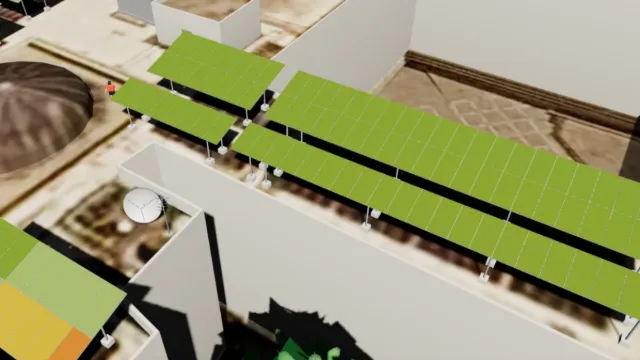
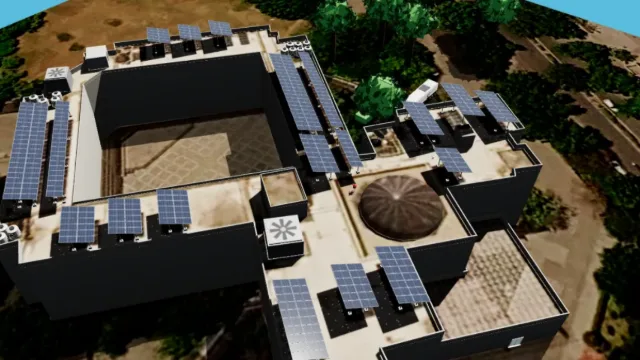
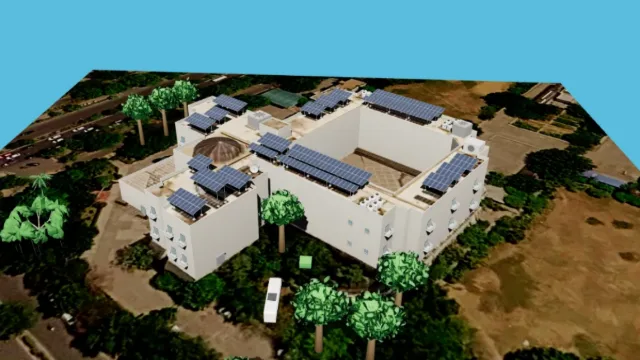
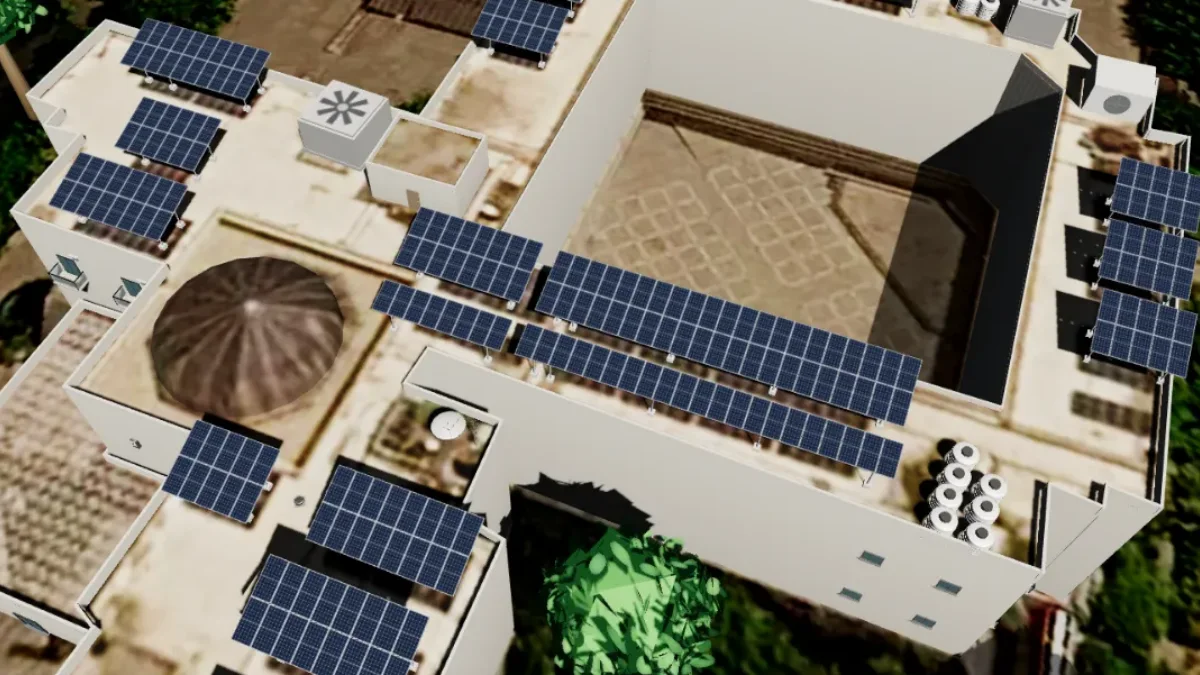
The only reliable way to size a system is to map the actual roof in 3D — real dimensions, real shadows, real panel layout. See how EPCs do this with Solar 3D Design, or read why 3D design beats guesswork when it comes to proposals.
Once the size is fixed, it flows into everything else: the subsidy amount, the payback period and the net-metering application. Getting it right at the start avoids revising all three later.
FAQ
How many panels for a 1.5-ton AC?
A 1.5-ton AC used for several hours a day in summer can add 150–250 units a month, roughly 1–2 kW of solar on top of your other usage. Size from your yearly bills rather than one appliance.
Can I install more than I need?
Possibly, within your sanctioned load and DISCOM rules, but surplus export is often credited at lower value than the power you save. Matching consumption usually gives the best return.
Does a 3 kW system need 3,000 sq. ft?
No — around 300 sq. ft of shadow-free roof is typical.
How many units does 1 kW of solar produce?
In most of India, roughly 120–150 units a month, or around 4 units a day on average across the year. It varies with location, season, tilt and shading — see how many units 1 kW generates.