Commercial and residential solar use the same core technology — panels, inverters, structures and cables — but the projects differ in almost every other way.
For an EPC moving from homes into shops, schools, hospitals, warehouses and factories, the jump can be bigger than expected. Sales cycles are longer, decision-makers are different, roofs are more varied, the electrical design is heavier and the financial pitch changes completely. This guide covers what changes, how to sell and design each type, how to price and staff for both, and the mistakes to avoid on your first commercial project.
Key points
- Residential systems are usually 2–10 kW and sell on bill savings and the PM Surya Ghar subsidy; commercial systems start around 50 kW and sell on tariff savings, tax benefits and sustainability goals.
- PM Surya Ghar applies to residential consumers only; commercial buyers rely on lower bills and benefits such as accelerated depreciation.
- Commercial roofs add tin sheds, canopies and parking structures, structural checks, three-phase design and state-specific metering rules.
- Commercial deals involve several people and take weeks to months, so follow-up discipline matters as much as the design.
What changes between the two
- Scale — commercial projects run into hundreds of kW or even MW, so small errors become large ones.
- Subsidy — PM Surya Ghar applies to residential consumers only.
- Decision-makers — commercial deals involve owners, finance teams, procurement and sometimes consultants, not one homeowner.
- Payback focus — commercial buyers weigh tariff savings, depreciation benefits and cash flow, not just the monthly bill.
- Engineering depth — three-phase inverters, longer cable runs, more protection and stricter documentation.
“Residential solar sells on savings. Commercial solar sells on balance sheet impact.”
| Residential | Commercial | |
|---|---|---|
| Typical size | 2–10 kW | 50 kW and above |
| Who decides | Homeowner and family | Owner, finance team, procurement, consultants |
| Sales cycle | Days to weeks | Weeks to months |
| Main incentive | PM Surya Ghar subsidy | Tariff savings, tax benefits, sustainability goals |
| Roof types | RCC terraces | RCC, tin sheds, canopies, parking structures |
| Usage pattern | Morning and evening peaks | Often daytime-heavy, matching solar |
| Grid connection | Usually single or three-phase, net metering | Three-phase; metering rules depend on state and size |
The residential pitch
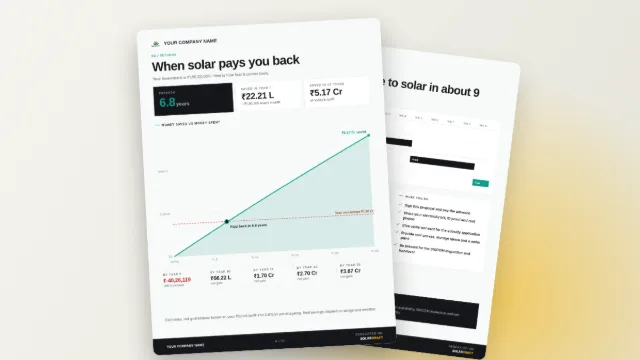
Homeowners want to know three things: what it costs after the subsidy, how much their bill will drop, and when it pays back. Keep the proposal simple and visual: their roof in 3D, the panel layout, monthly generation and a clear payback. Trust and speed win these deals.
Residential buyers also compare installers by how confident they feel. A clean proposal on WhatsApp the same day, a clear warranty explanation and a straightforward payment schedule usually matter more than a small price difference. Our guide on how homeowners choose an EPC shows the questions they ask.
The commercial pitch
Businesses usually pay higher electricity tariffs than homes and use most of their power during the day, which lines up well with solar generation. That often makes commercial payback attractive even without a subsidy. Finance teams also look at tax benefits such as accelerated depreciation, cash-flow impact and, increasingly, sustainability reporting.
Offer options — outright purchase, loans or third-party models — and back every number with a design. Our guide to solar financing options covers the main routes. Expect to present more than once: the owner may like the idea, but the finance head will want the assumptions, and the plant or facilities manager will ask about roof access, maintenance and safety.
What each commercial stakeholder wants to see
| Stakeholder | Main question | What to show |
|---|---|---|
| Owner / MD | Is this worth it? | Annual savings, payback and a one-page summary |
| Finance team | Do the numbers hold up? | Generation assumptions, tariff used, cash flow, tax benefits |
| Facilities / plant | Will it disrupt operations? | Layout, roof load, access walkways, maintenance plan |
| Procurement | Is the price fair and comparable? | Itemised quote, equipment list, warranties |
Design and engineering differences
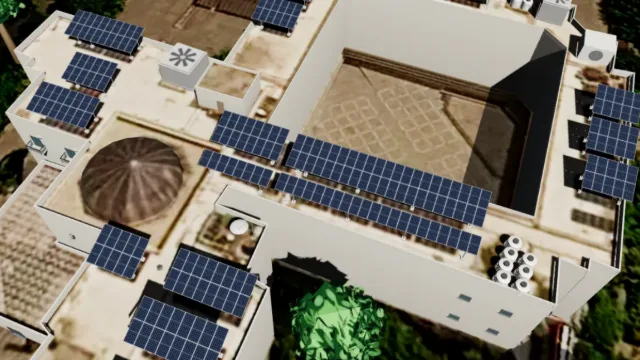
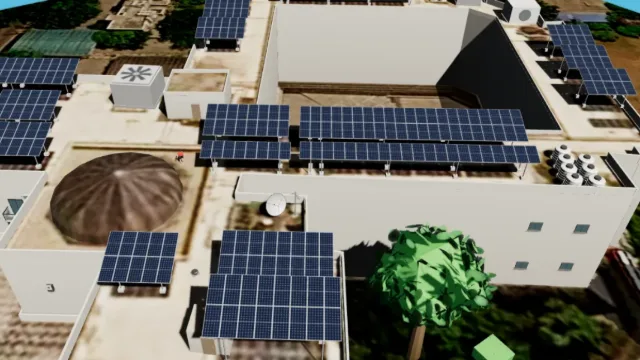
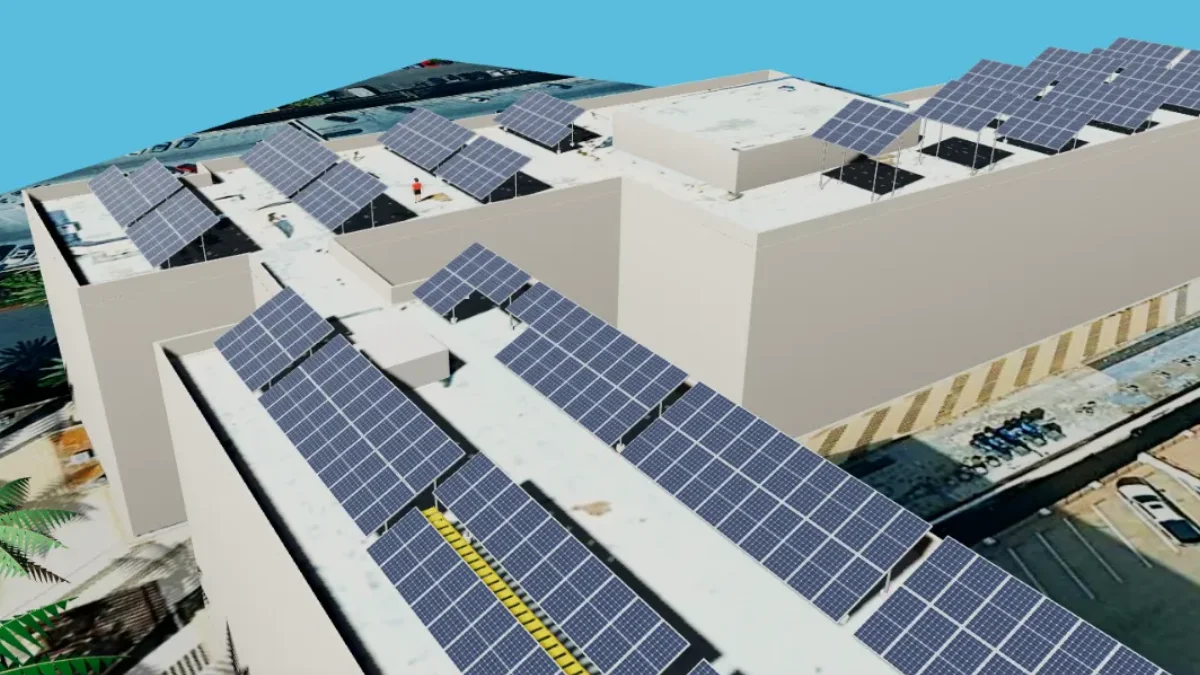
- Roof variety — tin-shed factory roofs need clamps that don't puncture the sheets; petrol pump canopies and parking structures need their own layouts.
- Structural checks — larger arrays add significant load; older sheds may need reinforcement before panels go up.
- Electrical design — three-phase inverters, longer cable runs, protection devices and a proper Single Line Diagram.
- Grid rules — net-metering limits vary by state and system size; larger systems may fall under different metering or open access rules. Check early with the DISCOM.
- Shading at scale — a 10% error on a 200 kW roof is 20 kW. Run a full shading analysis.
- Access and safety — walkways, lifelines and safe access routes matter more on large roofs that staff will visit for cleaning.

Petrol pumps, parking and canopies
Some of the best commercial sites aren't roofs at all. Petrol pump canopies, car parks and covered walkways already provide shade structures that can carry panels, generating power right where it's used for lighting, pumps and offices. These projects need their own layouts and structural checks, and bifacial panels often work well on them — see panel types compared. SolarDraft supports petrol pump and parking roof types directly in the 3D design.
For sites with open land rather than roof space, a ground-mounted array may make more sense. See ground-mounted vs rooftop solar for how the two compare.
Pricing and margins
Residential quotes are usually a single turnkey price per kW, plus GST. The work is repetitive, which keeps costs predictable, but every job carries fixed overheads — site visit, paperwork, DISCOM follow-up — that weigh more on a small system.
Commercial quotes are often itemised, with separate lines for structure, civil work, monitoring and annual maintenance. Per-kW prices are usually lower because of scale, but the ticket size is much larger. Payment terms matter more too: commercial clients may expect milestone payments, and a delayed final payment on a large project can strain cash flow. Build your payment schedule into the proposal from the start.
| For the EPC | Residential | Commercial |
|---|---|---|
| Volume | Many small jobs | Fewer, larger jobs |
| Quote format | Turnkey per-kW price | Itemised, often with options |
| Cash flow risk | Low per job | Higher; milestones and retention matter |
| Team needed | Fast sales and install crews | Engineering, documentation and project management |
| Growth driver | Referrals and local reputation | Track record and references |
Tools that scale with project size
Larger projects need tighter sizing accuracy — see how Solar 3D Design scales up to 10 MW layouts. The same model produces Structure BOM, PV array and string route drawings and an SLD, and supports RCC, tin-shed, petrol pump and parking roofs. Commercial proposals can then be generated with Solar Proposal, and the longer sales cycle tracked in the Solar CRM.
Mistakes to avoid on your first commercial job
- Quoting from a site visit alone, without a design of the full roof.
- Ignoring the roof's structural condition and the client's maintenance access needs.
- Promising net-metering terms before checking the state's rules for that system size.
- Under-estimating the time a procurement process takes — keep following up.
- Agreeing to payment terms that leave most of the money until after commissioning.
“On a commercial project, the design is your proof. Every number the finance team questions should trace back to it.”
If you are planning your first commercial projects, our guides on what a solar EPC does and common mistakes new EPCs make are a good place to start.
FAQ
Do commercial projects get a subsidy?
PM Surya Ghar is for residential consumers. Commercial projects usually rely on tariff savings and tax benefits such as accelerated depreciation instead.
Which is more profitable for an EPC?
Commercial projects bring larger tickets but longer cycles and more cash-flow risk; residential work brings volume and referrals. Many EPCs do both.
Do commercial systems use net metering?
It depends on the state and the system size. Some states allow net metering for larger systems, while others use net billing, gross metering or open access. Check with the DISCOM before quoting.
What size counts as a commercial project?
There is no single cut-off, but most commercial rooftop projects start around 50 kW, and industrial projects often run into hundreds of kW or more.