A rejected proposal is rarely about price alone. Usually it's about trust in the numbers.
Indian homeowners now collect two or three quotes before deciding on rooftop solar, and many of them check the numbers with a relative, a neighbour who already has solar, or an online calculator. When something in your proposal doesn't add up, the customer doesn't argue — they simply stop replying. This guide covers the most common reasons solar proposals get rejected, a practical fix for each, what a winning proposal includes, and what to do after you send it.
Key points
- Customers reject proposals they can't verify: layouts that don't match their roof, vague subsidy figures and missing payback.
- Show the gross price with GST, the PM Surya Ghar subsidy and the net cost as separate lines, and put payback on the first pages.
- Shading-adjusted generation and site-specific detail build more trust than optimistic numbers.
- Many “rejections” are proposals nobody followed up on — call within 48 hours.
The common reasons
- Panel count doesn't match the roof the customer knows.
- Subsidy amount looks inflated or vague.
- No clear payback period shown upfront.
- Generic template with no site-specific detail.
- Generation that's too good to be true.
- A proposal that arrives days after a competitor's.
1. The layout doesn't match the roof
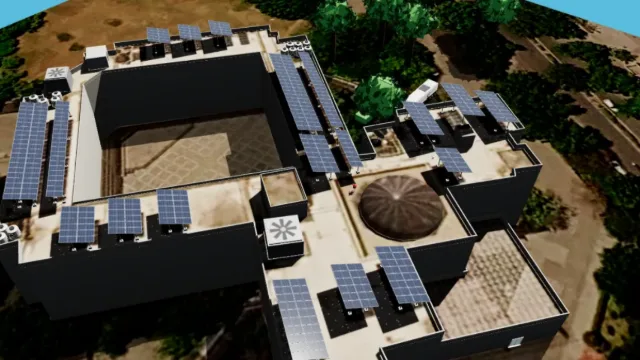
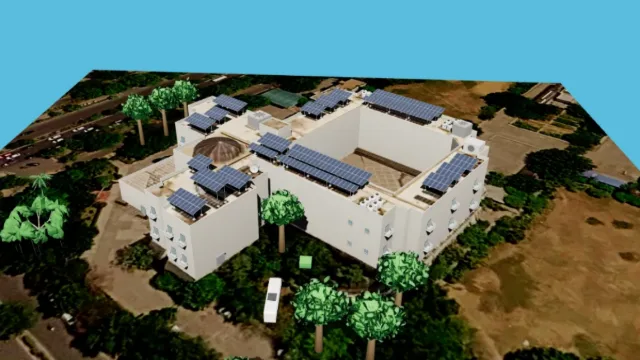
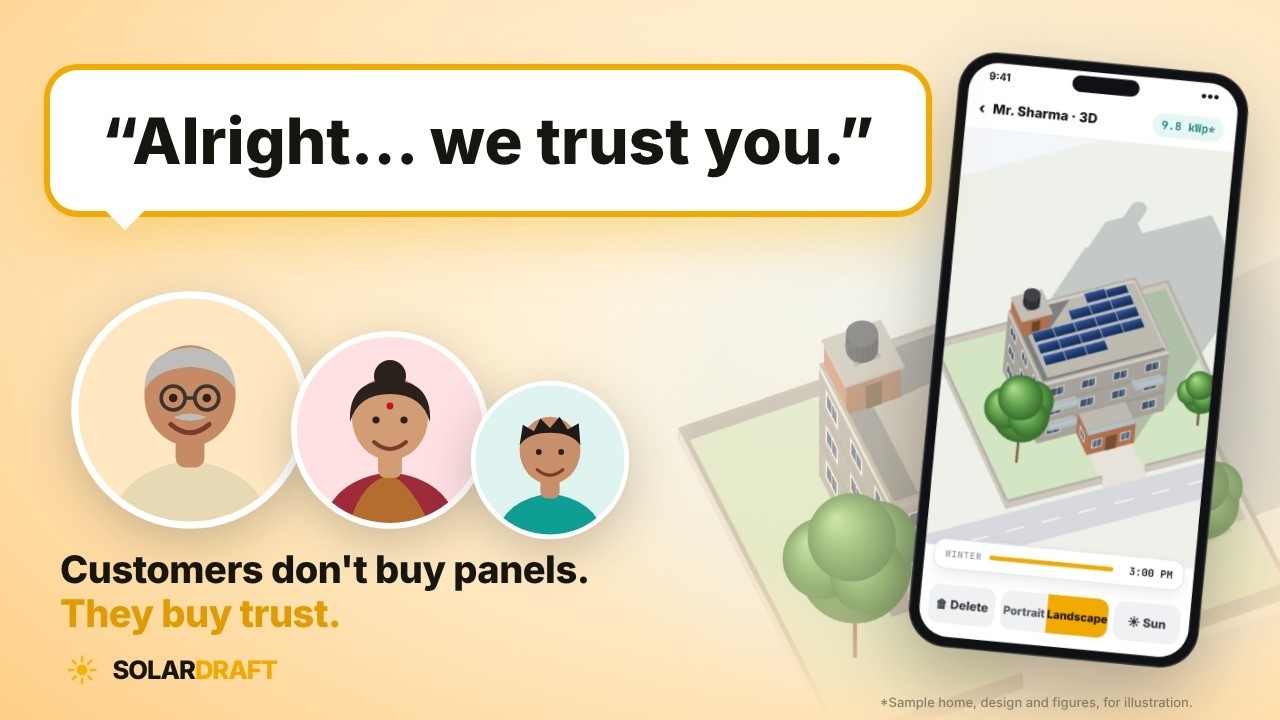
If the proposal shows 12 panels and the customer can see that their water tank and staircase room leave space for eight, the whole document loses credibility. The fix is to design on the customer's actual roof. Read 3D design vs guesswork for why this matters so much.
2. The subsidy figure is unclear
Customers have usually heard that the government pays “up to ₹78,000”. If your proposal lumps the subsidy into a single discounted price, they can't tell what they'll actually pay or when the subsidy arrives. Show the gross cost, the subsidy and the net cost as separate lines, and explain that the subsidy is credited to their bank account after commissioning. The PM Surya Ghar guide explains the slabs, and the free subsidy calculator lets customers check the figure themselves.
3. No payback period
Payback is the number most homeowners care about. If it's missing — or buried on page nine — the customer has to work it out, and they may get it wrong. Put payback, yearly savings and 25-year savings near the front. Our guide to calculating solar ROI shows the honest way to do it.
4. Generic template, no site detail
A proposal that could have been sent to anyone feels like it was. Site-specific details — their roof in 3D, the shading result, the exact panels and inverter, the system's monthly generation — show that you've actually designed their system.
5. Over-promised generation
Quoting generic “units per kW” without accounting for shading or orientation might win the order, but it creates a complaint a year later when the bill doesn't drop as promised. A shading analysis keeps generation estimates realistic. When one quote promises far more than the others, savvy customers get suspicious rather than excited.
6. Slow turnaround
The first credible proposal often wins. If a competitor sends a clear proposal the same day and yours takes a week, the decision may already be made.
7. Unclear equipment and warranties
“Tier-1 panels” and “branded inverter” aren't specifications. Name the exact panel and inverter models and list each warranty — see the warranty guide. Customers who can look up the equipment trust the quote more.
“Customers don't reject solar — they reject proposals they can't verify.”
| Red flag | What the customer thinks | Fix |
|---|---|---|
| Generic layout | “They haven't looked at my roof.” | 3D design of the real roof |
| Vague subsidy | “What will I actually pay?” | Verified slab, shown as its own line |
| Missing payback | “Is this even worth it?” | Payback and savings on page one |
| Over-promised generation | “This sounds too good.” | Shading-adjusted estimate |
| Vague equipment | “What am I really getting?” | Exact models and warranties |
| Slow turnaround | “The other company was faster.” | Same-day proposal from the design |
What a winning proposal includes
- The customer's roof in 3D with the final panel layout.
- System size, panel and inverter make, and expected monthly generation.
- Gross price with GST, subsidy and net price on separate lines.
- Payback period, yearly savings and long-term savings.
- Project timeline, payment schedule, warranty and the installer's details.
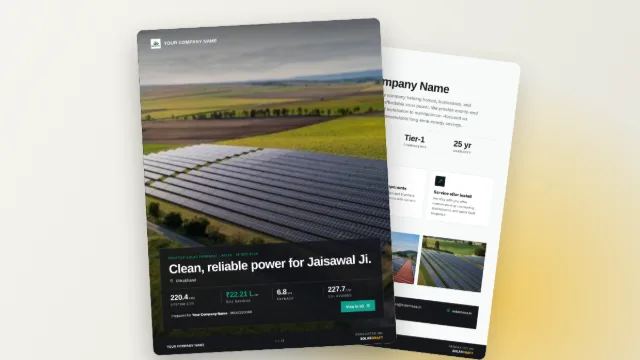
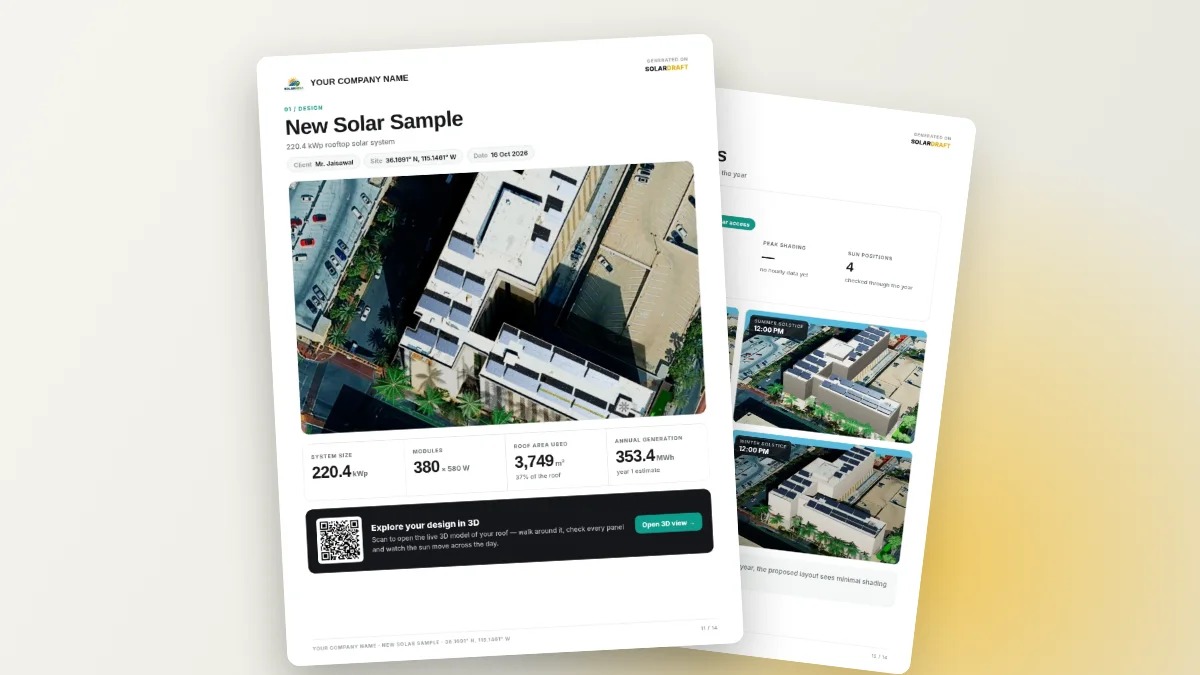
You can see every one of these sections in SolarDraft's sample proposal. Solar Proposal builds them automatically from the design, so nothing is copied by hand.
Order the pages the way customers read
| Page | What it answers |
|---|---|
| Cover and summary | System size, savings and payback at a glance |
| Their roof in 3D | Proof you designed their system |
| Price, subsidy and net cost | What they will actually pay, and when |
| Generation and savings | Month-by-month units and bill savings |
| Equipment and warranties | Exactly what they are buying |
| Timeline and payment schedule | What happens next, and when to pay |
After you send it
Many “rejections” are really proposals nobody followed up on. Log every proposal with a next follow-up date — a Solar CRM does this for you — and call within 48 hours to walk the customer through it. Ask what they liked, what worried them and who else is involved in the decision. Our post on why EPCs need a CRM goes deeper.
“A follow-up call isn't pressure. It's the moment the customer's doubts get answered instead of guessed.”
FAQ
Should I lower the price when a proposal is rejected?
Ask first. If the customer couldn't verify the layout or the subsidy, fixing the proposal often works better than a discount.
How long should a proposal be?
Long enough to answer every question, with the key numbers on the first pages. Most customers read the cover and the savings page; the rest builds confidence.
Should the proposal be a PDF or a link?
Both work. Most Indian customers open proposals on WhatsApp, so make sure it reads well on a phone.
How quickly should I send a proposal after the site visit?
The same day if you can. A fast, accurate proposal is one of the strongest signals of a professional installer.