A net-zero home produces as much energy as it consumes over a year. In most Indian homes, rooftop solar is the biggest lever to get there.
Net zero doesn't mean living off-grid or never paying an electricity bill. It means that, across twelve months, the solar units your home generates match the units it uses. Some months you'll export more than you import, others less, and net metering balances them out. This guide explains what net zero means in practice, the order to do things in, how to size the system, how EVs and apartments change the picture, and the limits to be aware of.
Key points
- Net zero means yearly solar generation matches yearly consumption; net metering balances the months.
- Cut the load first — LED lights, BLDC fans, efficient ACs and solar water heating are cheaper than extra panels.
- Size solar from 12 months of bills: in much of India, 1 kW produces roughly 1,400–1,600 units a year on a shade-free roof.
- Fixed charges remain, and roof space, sanctioned load and year-end surplus rules set practical limits.
What “net zero” means — and doesn't
| Term | What it means | Grid connection |
|---|---|---|
| Net-zero energy home | Yearly solar units equal yearly consumption | Yes, with net metering |
| Near-zero bill | Energy charges close to zero; fixed charges remain | Yes |
| Off-grid home | No grid at all; batteries cover nights and cloudy days | No |
For almost every city home, net zero with net metering is the practical and affordable route. Off-grid living needs large batteries and careful energy management — see on-grid vs off-grid vs hybrid.
“Net-zero isn't about maximum panels — it's about matching generation to real usage.”
Step 1: know your consumption
Add up the units on your last 12 electricity bills. That annual number is your target. Notice the pattern too: summer air-conditioning months often use twice as much as winter months, and the monsoon brings both lower generation and different usage.
Step 2: cut the load first
Every unit you don't use is a unit you don't need panels for, and efficiency upgrades are usually cheaper per unit saved than extra solar capacity.
| Upgrade | Why it helps |
|---|---|
| LED lighting | Uses a fraction of the power of tube lights and CFLs |
| BLDC ceiling fans | Use far less power than older fans, and run for hours every day |
| Inverter ACs with high star ratings | Cut the biggest summer load; set to around 24°C |
| Efficient refrigerator and pumps | Run all year; old units waste a lot |
| Solar water heater or heat pump | Replaces a power-hungry electric geyser |
| Shading and insulation | Cooler rooms mean less AC use |
Step 3: size solar to the new total
Divide your annual units by the yearly generation of 1 kW in your area — roughly 1,400–1,600 units in much of India on a shade-free roof. A home using 4,500 units a year needs about 3–3.5 kW. Use the free solar size calculator, then confirm with a design of your actual roof — see how many panels you need.
| Home type | Typical system size |
|---|---|
| 2BHK apartment | 2–3 kW |
| Independent house | 4–6 kW |
| Large house with several ACs or an EV | 6–10 kW |
How the year balances out
Net zero is an annual balance, not a monthly one. A typical pattern looks like this:
| Season | Solar generation | Home consumption | Net effect |
|---|---|---|---|
| Spring (Feb–Apr) | High | Moderate | Surplus banked |
| Summer (May–Jun) | High | Highest (AC) | Roughly balanced or slight deficit |
| Monsoon (Jul–Sep) | Lower | Moderate to high | Deficit drawn from credits |
| Winter (Nov–Jan) | Moderate | Lowest | Surplus banked |
The exact pattern depends on your region and habits, but the principle holds: surplus months fund deficit months through net metering credits.
Step 4: net metering and subsidy
Net metering is what makes the annual balance work, crediting surplus against evening, monsoon and summer-peak use. Apply through your DISCOM or the PM Surya Ghar portal; our DISCOM approval guide explains the steps. Residential homes can also claim the PM Surya Ghar subsidy, which lowers the net cost and shortens the payback.
Electric vehicles and net zero
An EV charged at home can add a significant number of units a year. As a rough guide, a small electric car might use somewhere around 12–15 units per 100 km, so driving 1,000 km a month could add 120–150 units — about 1 kW of extra solar. If you're planning an EV, size the system with that load included, and try to charge during the day when the panels are producing.
The limits
- Roof space — apartments often share a small roof; group housing may install a common system.
- Sanctioned load — your system size may be capped at your sanctioned load.
- Year-end surplus — in some states, excess units at the end of the year earn little, so aim to match, not exceed, your use.
- Shading — a shaded roof needs more capacity for the same units; see rooftop shading.
- Fixed charges — even a perfectly balanced home pays the DISCOM's fixed charges.
“The cheapest unit of solar is the unit you never needed to generate.”
Net zero in apartments
Flats are harder because the roof is shared and small compared with the number of homes. Group housing societies can install a common rooftop system for lifts, pumps and common lighting, which cuts maintenance charges for every resident, and scheme support exists for these common facilities. Individual flats may get closer to net zero through efficiency upgrades and a share of the society's system rather than panels of their own.
Tracking progress
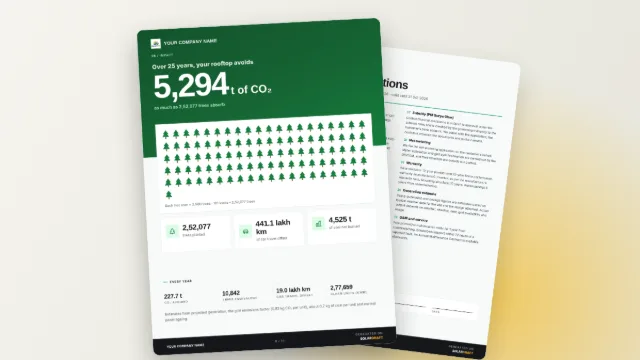
Compare yearly imported and exported units on your bills, and watch generation in the inverter app. If generation drops, check the maintenance checklist. The free CO₂ offset calculator shows the environmental impact of your system.
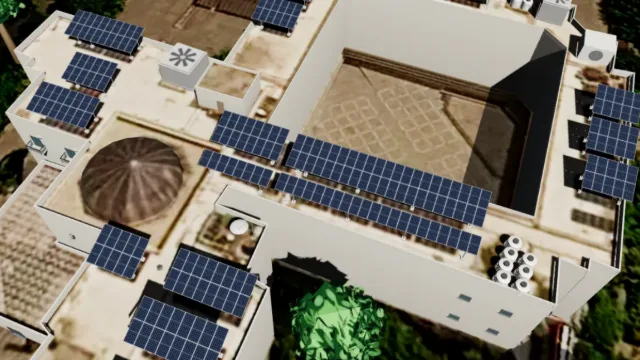
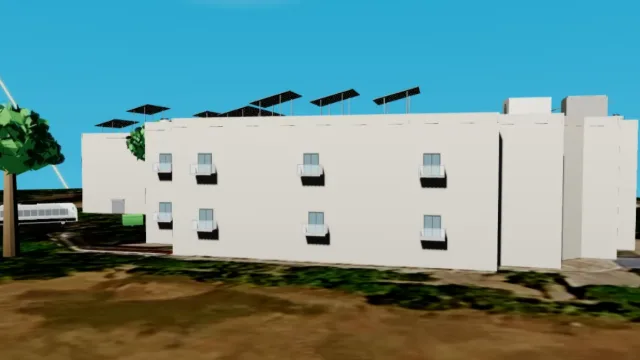
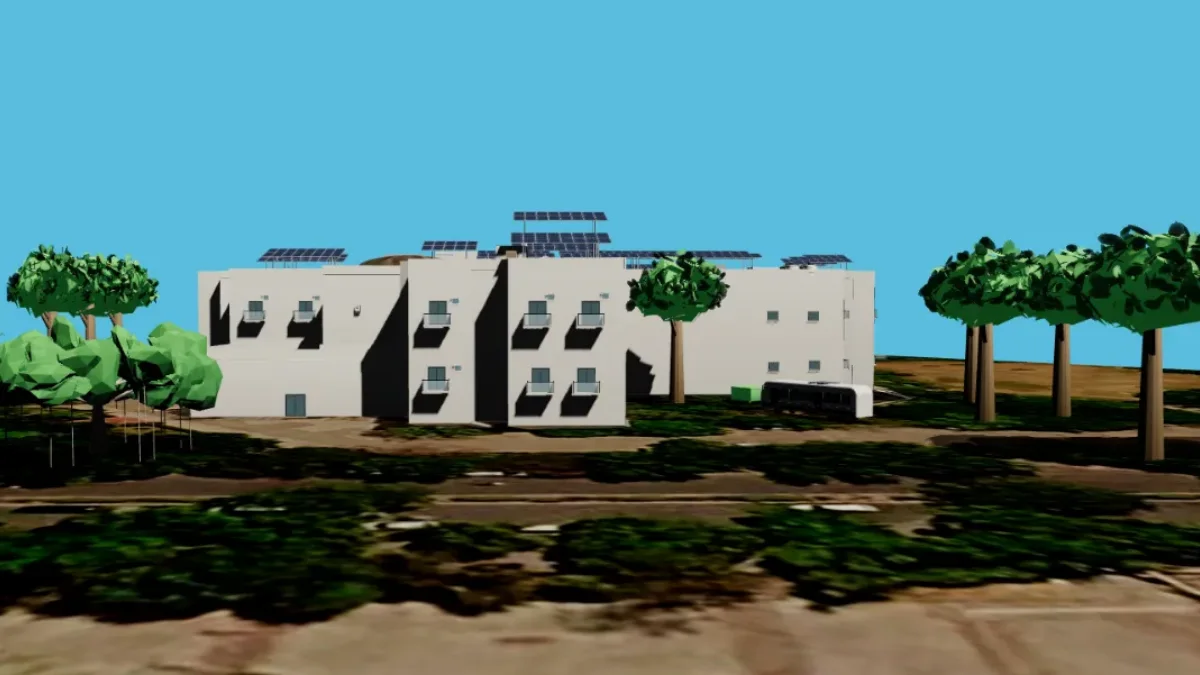
Installers can show the customer's expected generation, savings and environmental impact in a SolarDraft proposal, built from a 3D design of the actual roof.
FAQ
Will my bill be zero?
Your energy charges can be close to zero, but fixed charges and duties usually remain.
Can an apartment be net zero?
It's harder because of limited roof space, but efficiency upgrades plus a share of a society's common solar system can get close.
Do I need batteries for a net-zero home?
No. With net metering, the grid balances day and night and the seasons. Batteries are only needed for backup during outages or for off-grid homes.
How long does a net-zero solar system take to pay back?
It depends on your tariff, system cost and subsidy, but many residential systems pay back within the first several years. See our payback guide.