A single shaded panel doesn't just lose its own output — on many systems it drags down the entire string. This is why shading is the most underestimated factor in sizing a rooftop system.
On Indian rooftops, shade comes from everywhere: overhead water tanks, staircase rooms, parapet walls, mobile towers, neighbouring buildings and trees that grow every year. It also moves — a terrace that's fully sunny in May can be half shaded in December. This guide explains why a little shade costs so much, where it comes from, how it changes through the year, how EPCs catch it before installation, and the design fixes that work on shaded roofs.
Key points
- Panels in a string share one current, so a shaded panel can pull down the output of the whole string; bypass diodes limit but don't remove the loss.
- Winter is the critical season in India: the low southern sun throws long shadows from tanks, staircase rooms and south-side buildings.
- A single site photo isn't enough — you need the sun's path across the whole year, hour by hour.
- Moving panels, raising the structure, splitting strings or using panel-level electronics fixes most shading problems at the design stage.
Why a little shade costs a lot
Panels in a string are wired in series, so the current through the string is limited by its weakest panel. When one panel is shaded, its output drops, and the rest of the string is pulled down with it. Bypass diodes inside each panel limit the damage by letting current skip the shaded section, but some loss always remains.
Even partial shading on one panel in a string can cut that string's output by far more than the shaded area suggests, because of how panels and inverters are wired together. This is also why two rooftops with the same area can produce very different numbers of usable units.
How panels handle partial shade
A typical modern panel is divided into sections, each protected by a bypass diode. If a shadow covers part of one section, that section is bypassed and the rest of the panel keeps working at reduced output. Half-cut cell panels split the panel into upper and lower halves, which helps when shadows fall across one half. These features reduce the damage, but they don't make shade harmless — the design still needs to avoid it.
Common sources of rooftop shading
| Source | When it shades | Usual fix |
|---|---|---|
| Water tanks and chimneys | Through the day; widest arc in winter | Keep panels out of the shadow zone or raise the structure |
| Staircase rooms and lift rooms | Long shadows in winter | Leave the area north of the room free |
| Parapet walls and railings | Mornings, evenings, winter | Setback from the parapet or an elevated structure |
| Neighbouring buildings | Depends on height and direction; worst in winter | Model the building and avoid its shadow |
| Trees | Changes as they grow | Agree on trimming; leave margin |
| Mobile towers, poles, cables | Narrow moving shadows | Place panels away; check with the analysis |
| Dust and bird droppings | Always, until cleaned | Regular cleaning; see the maintenance checklist |
Shade changes with the seasons
In India the sun is high in summer and low towards the south in winter. Low winter sun makes shadows much longer, and objects on the south side of a roof throw their shadows north across the panels. Morning and evening shadows come from objects to the east and west. That's why a single photo, or a site visit on one day, isn't enough: you need the sun's path across the whole year.
| Season | Sun position | What to watch |
|---|---|---|
| Summer | High overhead | Short shadows; east-west objects in morning and evening |
| Winter | Low in the south | Long shadows from tanks, staircase rooms, south-side buildings |
| Morning and evening | Low in the east or west | Parapets, railings and neighbouring floors |
A common design aim is to keep panels free of shade during the main generating hours, roughly 9 am to 3 pm, on every day of the year. Early-morning and late-evening shade costs much less because the sun is weak then anyway.
“Shade you find in the design costs nothing to fix. Shade you find after installation costs a customer.”

How EPCs catch it before installation
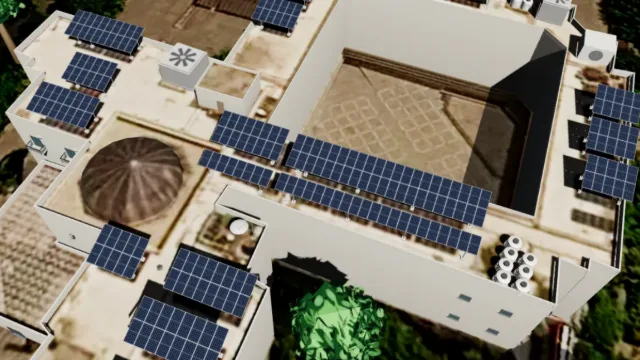
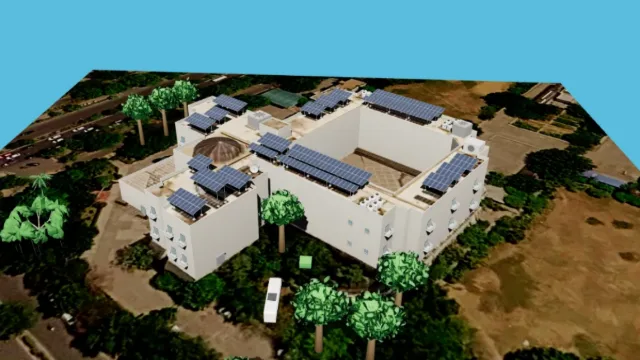
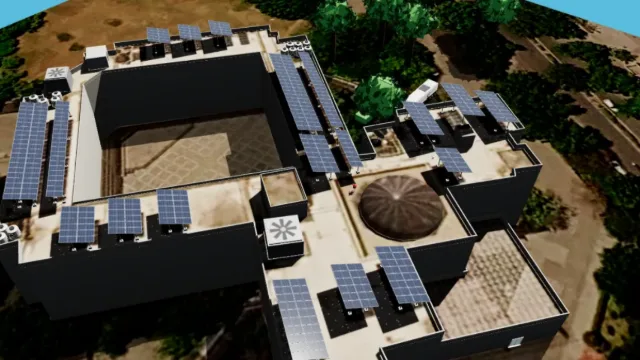
A proper site survey plots the sun's path across the roof through the year and flags shadows hour by hour — not just a single snapshot. Solar 3D Design runs this shadow analysis automatically on the actual rooftop, using the building and obstacle heights in the model, so the customer's proposal and subsidy numbers hold up after installation, not just on paper.
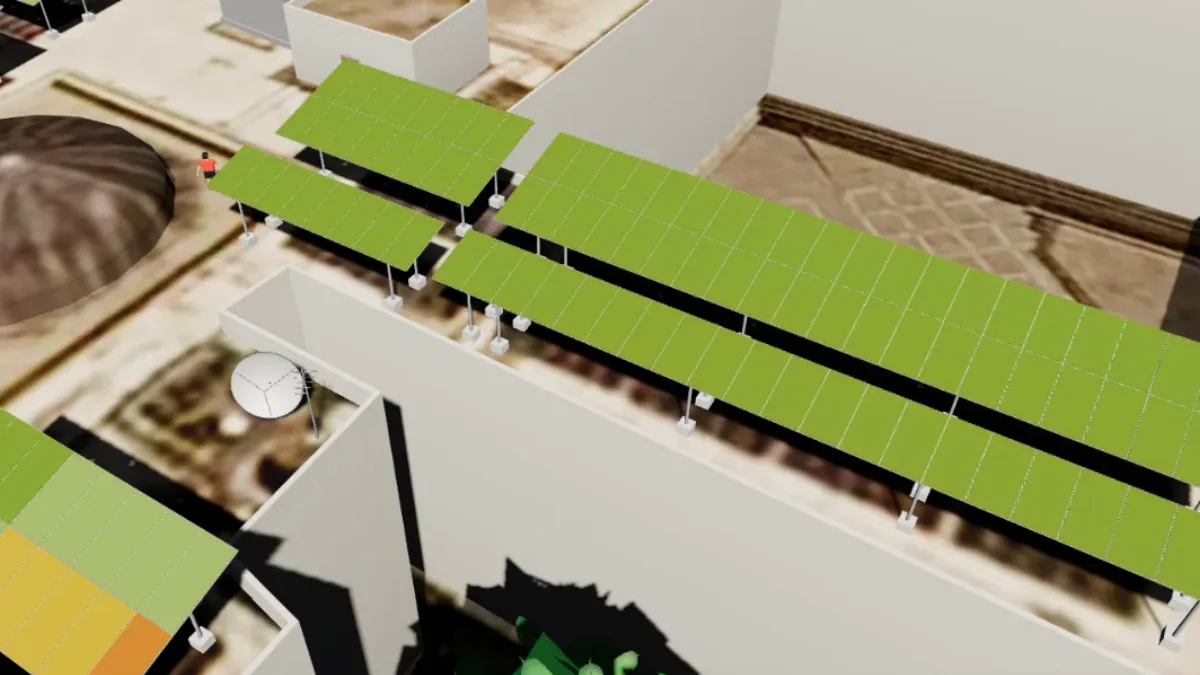
In SolarDraft every panel is coloured by sun exposure — green for the most sun, yellow and orange for less — so you can see at a glance which panels to move or remove. You can see real examples in the shading analysis samples.
What a good shading check includes
- Every obstacle on and around the roof, with its real height.
- The sun's path for every month, not just today.
- A per-panel result, so weak spots are obvious.
- A shading loss figure that feeds into the generation estimate in the proposal.
Design fixes for shaded roofs
- Move panels out of the worst shadow zones, even if it means a slightly smaller system.
- Raise the structure to clear parapets, a common approach on Indian terraces.
- Split strings so shaded and unshaded panels sit on different MPPT inputs of the inverter.
- Use panel-level electronics such as microinverters or optimisers on complex roofs. See string vs micro inverters.
- Orient rows carefully and leave enough gap between rows that they don't shade each other in winter — see tilt angle and row spacing.
- Agree on tree trimming with the customer where it's possible.
What shading means for the customer
Shading changes three numbers the customer cares about: how many panels fit, how many units they generate, and how quickly the system pays back. If a proposal ignores shade, all three are optimistic, and the gap shows up in the first winter. Being upfront — “we left these spots empty because they're shaded in December” — builds more trust than a bigger system that underperforms. Our guide on why proposals get rejected shows how much customers value that honesty.
| Approach | On paper | In the first year |
|---|---|---|
| Ignore shading | Bigger system, higher generation | Output falls short; complaints |
| Design around shading | Slightly smaller system, realistic generation | Output matches the proposal; referrals |
FAQ
Is a little morning shade acceptable?
Often yes. Most generation happens between about 9 am and 3 pm, so early-morning shade costs less than midday shade. The analysis tells you exactly how much.
Can I fix shading after installation?
Sometimes, by rearranging strings or adding optimisers, but it's far cheaper to design around it. That's the core argument in 3D design vs guesswork.
Do microinverters solve shading completely?
No. They stop one shaded panel from dragging down the others, but the shaded panel itself still produces less. Avoiding shade remains the first step.
Why does my system produce less in winter?
Shorter days and a lower sun reduce generation everywhere, and longer shadows can make it worse on shaded roofs. A year-round analysis predicts this before installation.