Most solar quotes look similar on paper. The differences that matter only show up in the questions you ask before you sign.
Rooftop solar is a 25-year decision, and the installer you pick shapes how well the system performs, how smoothly the subsidy and net metering go, and how easy it is to get help later. Price matters, but the cheapest quote can become the most expensive if the system underperforms or the paperwork stalls. This guide gives homeowners the questions to ask, a simple way to compare quotes fairly, what the contract and warranties should say, and the red flags to watch for.
Key points
- Choose an installer who designs your actual roof, names the exact equipment and puts generation, price, subsidy and payback in writing.
- For the PM Surya Ghar subsidy, the installer must be a vendor registered for your DISCOM under the scheme.
- Compare quotes on the same system size, equipment and generation — then on net price after subsidy and payback, not the headline price.
- Avoid quotes with no site visit, pressure to sign today, cash-only payment or vague answers about paperwork.
Ask before you sign
- Can they show a 3D design of your actual roof, not a template?
- Who handles DISCOM paperwork, net-metering approval and the subsidy claim?
- Which panel and inverter models will they install, exactly?
- What is covered under warranty, for how long, and by whom?
- Do they offer a maintenance plan after installation?
Experience and registration
Ask how many systems they've installed in your area and request two or three customer references you can call or visit. If you want the PM Surya Ghar subsidy, the installer must be a registered vendor for your DISCOM under the scheme — check this on the national portal. Also confirm that they issue proper GST invoices.
Design and sizing
A good installer starts with your electricity bills, not your roof size. They should explain why they recommend a particular kW, show where each panel goes, and point out anything that casts shade. Our guide on how many panels you need helps you sanity-check the size, and rooftop shading explains why the layout matters.
Equipment
Ask for the exact panel and inverter brands and models, not just “Tier-1 panels”. Check the wattage, panel type and warranties — see panel types compared and inverter types. For subsidy cases, the panels must meet the scheme's eligibility rules, including domestic content requirements.
Structure and roof
Ask what the mounting structure is made of, how it is coated against rust, how high it will be and how it is fixed to your roof. A good installer checks your roof's condition and waterproofing first and explains how they will avoid leaks.
Paperwork
Confirm in writing that the installer handles the DISCOM application, inspection, net meter and subsidy documents. The steps are covered in our DISCOM approval guide.
After-sales
Ask who you call if output drops, how quickly they respond, and whether cleaning or annual checks are included. Our maintenance checklist shows what a good plan covers.
“If a contractor can't show you your own roof in the proposal, they haven't actually designed your system yet.”

Comparing quotes fairly
Quotes are only comparable when they describe the same system. Line them up side by side:
| Ask about | Why it matters |
|---|---|
| System size (kW) and panel count | Same size, same comparison |
| 3D design of your roof | Accuracy — proof it fits |
| Panel and inverter make and model | Quality and efficiency |
| Expected yearly generation | Savings and payback |
| Warranty terms | Long-term cost |
| Structure type, coating and height | Durability and roof use |
| Paperwork and subsidy support | Fewer delays |
| Payment schedule | Cash flow and protection |
Then compare the net price after subsidy and the payback period, not just the headline price. If one quote promises much higher generation than the others for the same size, ask how it was calculated.
A simple scorecard
Score each installer from 1 to 5 on each line and add them up. It turns a confusing decision into a clear one:
| Criterion | What a 5 looks like |
|---|---|
| Design | Your roof in 3D, layout and shading explained |
| Transparency | Exact equipment, itemised price, GST invoice |
| Paperwork | Handles DISCOM, net meter and subsidy in writing |
| Warranties | Clear panel, inverter and workmanship terms |
| References | Local customers you could actually speak to |
| Service | Named contact, response time, maintenance plan |
| Value | Fair net price and realistic payback |
Understanding the warranties
A solar system usually comes with several warranties from different parties. Ask for each one in writing:
- Panel product warranty — covers manufacturing defects, from the manufacturer.
- Panel performance warranty — guarantees a minimum output over 25 years or more.
- Inverter warranty — usually shorter; ask about extensions.
- Workmanship warranty — covers the installation itself, from the installer.
Our solar warranty guide explains what each one covers and how to claim.
What the contract should say
- System size, panel count, and the exact panel, inverter and structure specifications.
- Total price with GST, and the subsidy and net price shown separately.
- A payment schedule linked to milestones.
- Who files the DISCOM, net-metering and subsidy documents.
- An expected timeline, with a note that DISCOM steps can vary.
- Warranty terms and the after-sales contact.
Red flags
- A quote with no site visit or design, just a price per kW.
- Pressure to sign today for a “special price”.
- A system much larger than your consumption needs.
- No GST invoice, or a request for full payment upfront in cash.
- Vague answers about equipment brands or who files the paperwork.
- Generation promises far above other quotes for the same size.
“A good installer answers questions before you ask them. A risky one hopes you won't ask at all.”
What a good proposal looks like
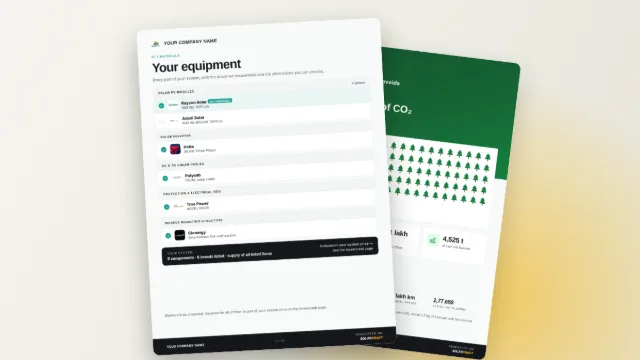
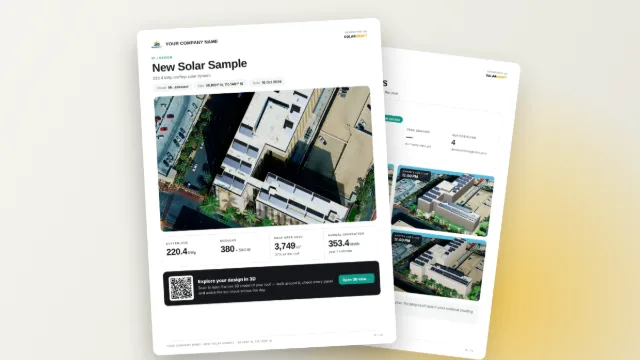
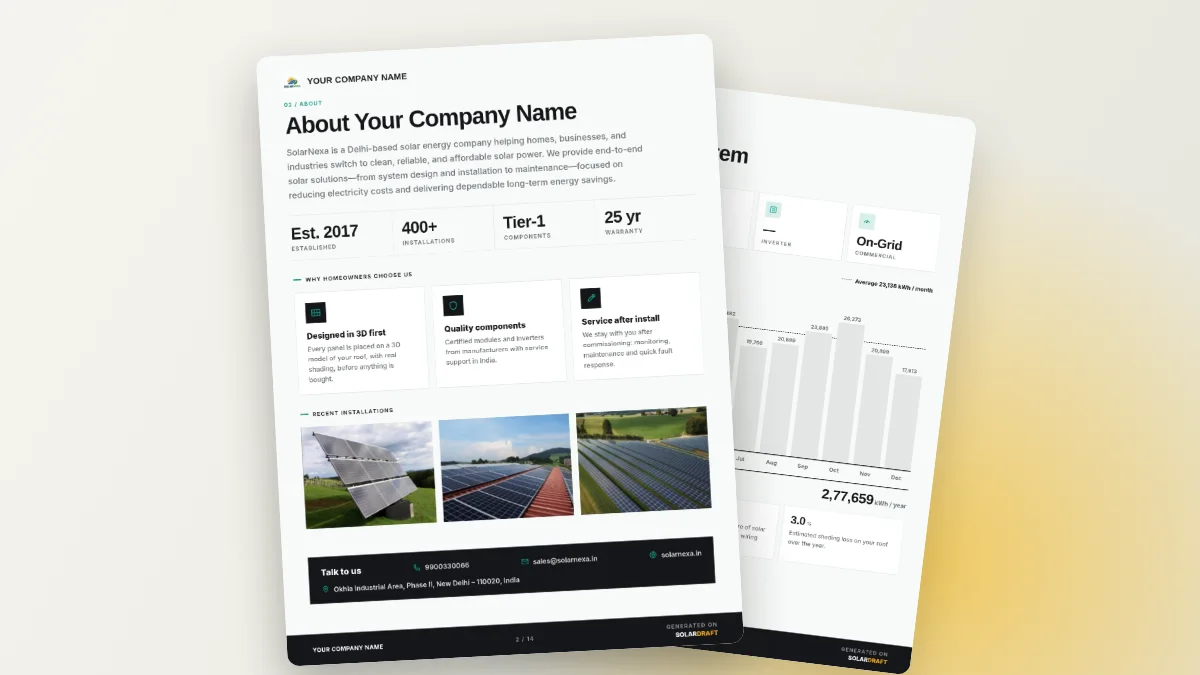
It shows your roof in 3D with the panel layout, the system size and equipment, monthly generation, the price with GST, the subsidy and net price on separate lines, payback, a project timeline, a payment schedule and warranty details. You can see an example in this sample solar proposal, made with SolarDraft.
See what an EPC is actually responsible for in What Is an EPC in Solar?
FAQ
How many quotes should I get?
Two or three is usually enough, as long as they're for comparable systems.
Should I pay the full amount upfront?
No. A typical schedule is an advance, a payment on material delivery, and the balance after installation and commissioning. Get it in writing in the proposal.
How long does the whole process take?
Installation takes a few days; the full process including DISCOM approval usually takes a few weeks, depending on your DISCOM.
Should I choose the cheapest installer?
Choose the best value: a clear design, good equipment, solid warranties and reliable paperwork are worth paying a little more for.
How do I check if an installer is registered for PM Surya Ghar?
Registered vendors are listed for each DISCOM on the national PM Surya Ghar portal. Ask the installer for their registration and check it there.