Starting a solar EPC business needs less capital than most industries — but it needs a specific set of essentials in place before your first project.
Demand is there: PM Surya Ghar targets rooftop solar for one crore homes, commercial users want lower power bills, and national renewable targets keep rising (see India's renewable energy targets). What separates the installers who grow from those who stall is preparation. This checklist covers choosing a focus, registrations, supply, team, tools, the first sales and the numbers to watch, in the order most new EPCs tackle them.
Key points
- Register the business, get GST and the electrical licence your state requires, and register as a PM Surya Ghar vendor for residential work.
- Tie up with one or two distributors and agree credit terms — you'll pay for material before the final customer payment arrives.
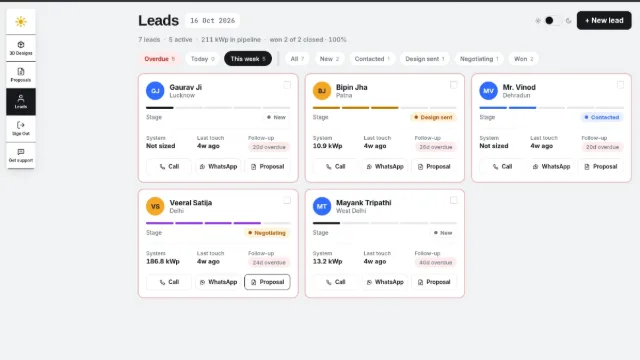
- From day one, use a tool to design and quote accurately and a CRM to track every lead.
- Protect cash flow with milestone payments, and build reputation through clean installs and smooth paperwork.
Choose your focus first
Most new EPCs start with residential rooftops, because the jobs are small, repeatable and supported by the PM Surya Ghar subsidy. Others start with small commercial roofs through business contacts. Your focus decides which registrations, tools and team you need first.
| Residential first | Commercial first | |
|---|---|---|
| Typical job | 2–10 kW homes | 50 kW and above |
| Sales cycle | Days to weeks | Weeks to months |
| Key paperwork | PM Surya Ghar vendor registration, DISCOM net metering | DISCOM rules for larger systems, client procurement |
| Working capital per job | Lower | Higher |
| Growth driver | Referrals and local reputation | References and engineering credibility |
See commercial vs residential solar for how the two differ in practice.
1. Registrations and licences
| Registration | Why you need it |
|---|---|
| Business entity | Proprietorship, partnership, LLP or private limited, depending on your plans and partners |
| GST registration | To bill customers and claim input credit on equipment |
| Udyam (MSME) registration | Useful for credit and some tenders |
| Electrical contractor licence | Electrical installation work generally needs a licence from your state's electrical inspectorate; requirements vary by state |
| PM Surya Ghar vendor registration | To install subsidised residential systems, with the DISCOMs you'll work with |
2. Supply and pricing
Build relationships with one or two distributors for panels, inverters and structures. For subsidised residential work, make sure the panels qualify under the scheme's domestic content rules. Agree credit terms early: you'll usually buy material before the customer's final payment arrives. Learn the basics of panel types and inverter types so you can explain options confidently.
Price every job on its full cost: material, structure, cabling and protection, transport, installation labour, site visits, DISCOM follow-up and a margin for warranty visits. Quoting below cost to win early jobs is one of the fastest ways to run out of cash.
3. Team
- Sales — someone who can visit sites, design and explain a proposal.
- Installation crew — trained technicians who follow safety practice on roofs.
- Paperwork — someone who owns DISCOM applications and subsidy documents. See the DISCOM approval process.
In the first months one person often does two of these jobs. That works as long as each job has a clear owner and nothing falls between them.
4. Tools
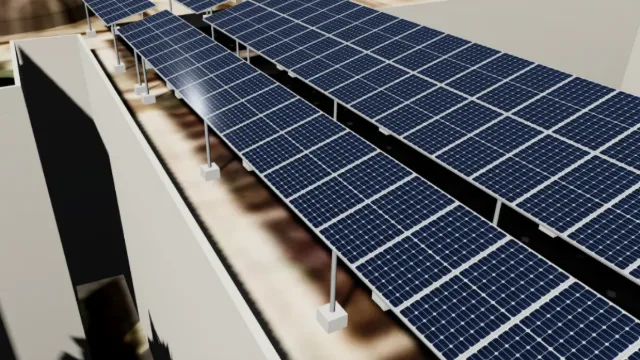
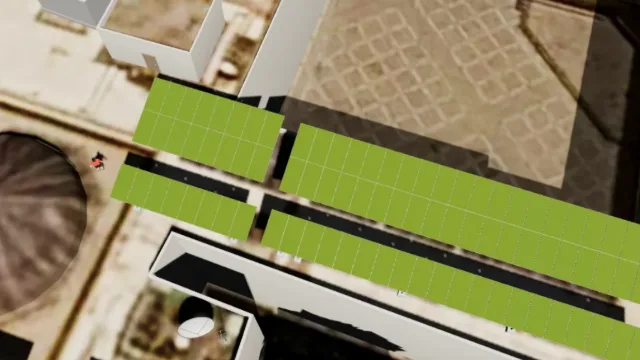
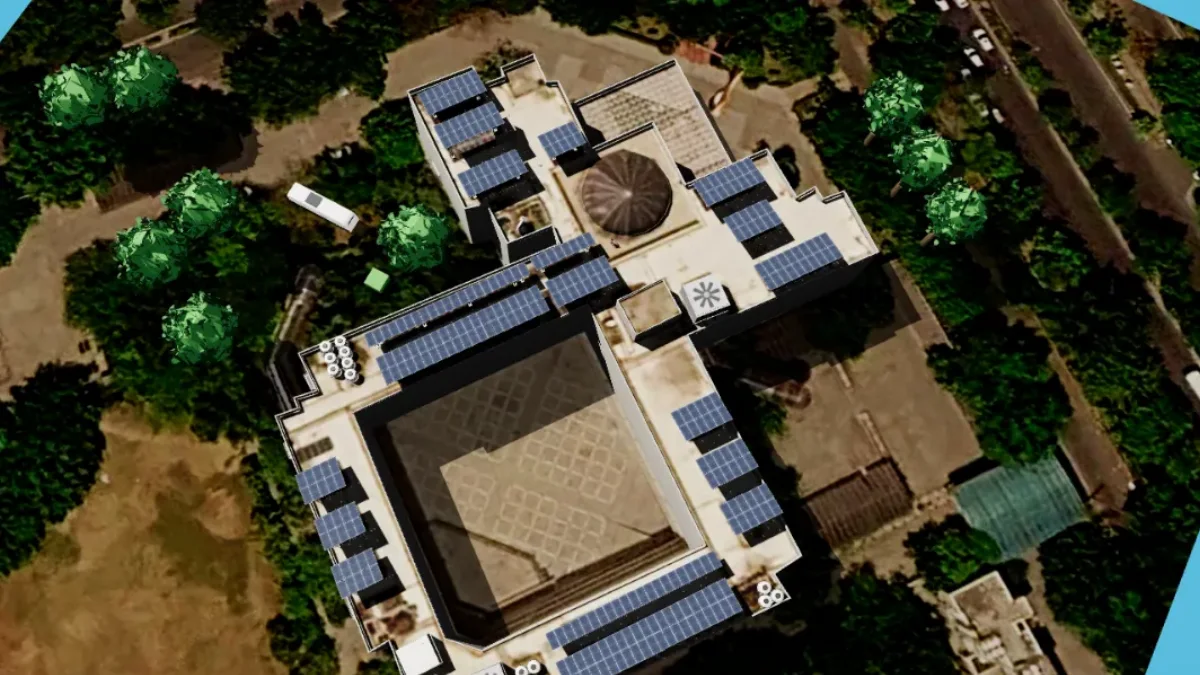
Two tools matter from day one: one to design and quote accurately, and one to track leads. A 3D design of the real roof avoids the most expensive early mistake — quoting a system that doesn't fit. Solar 3D Design, Solar Proposal and Solar CRM cover this, and there is a free plan to start.
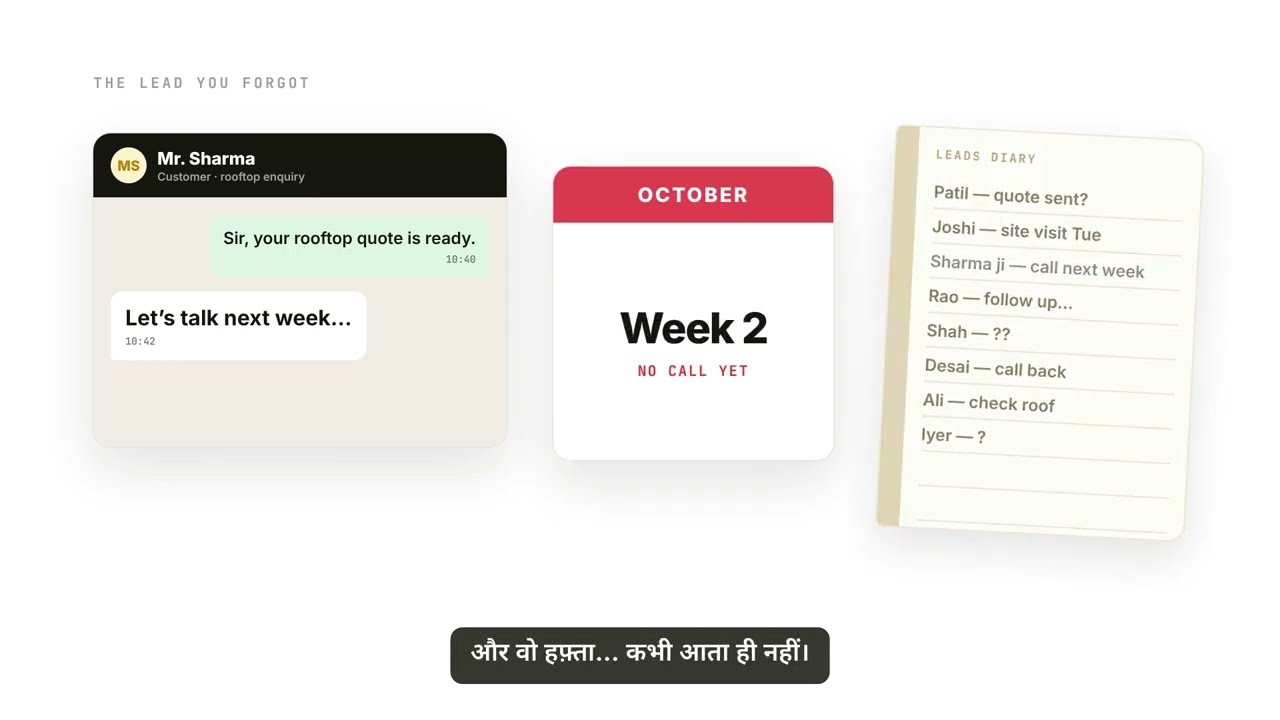
“Most new EPCs don't fail on installs — they fail on quoting and follow-up.”
5. Your first customers
- Start with your network: friends, family and local businesses.
- Ask every happy customer for a referral and a review.
- Run small, local ads and track which ones bring site visits, not just calls.
- Send a clear, same-day proposal after every site visit — speed wins early deals.
- Show your first installations on a simple website and social media, with the customer's permission.
Your first 90 days
| Period | Focus |
|---|---|
| Weeks 1–3 | Registrations, licences, distributor tie-ups, vendor registration |
| Weeks 3–5 | Set up design, proposal and CRM tools; prepare a standard proposal and payment schedule |
| Weeks 5–8 | First site visits and proposals from your network; first orders |
| Weeks 8–12 | First installations, DISCOM applications and handovers; ask for referrals |
| Step | Priority | When |
|---|---|---|
| Registrations and licences | High | Before the first order |
| Distributor tie-ups | High | Before the first quote |
| Proposal tooling | High | Before the first site visit |
| Lead tracking | High | Before 10 enquiries |
| After-sales process | Medium | Before the first handover |
Safety and quality from the first job
Roof work carries real risk. Give your crew harnesses and proper ladders, plan cable routes before drilling, and check earthing and surge protection on every system. Photograph each installation step for your records. Clean, well-documented installs pass DISCOM inspection faster, reduce warranty visits and give you material for your website and social media.
Working capital and cash flow
Most EPCs take an advance, then collect the balance in stages. Write the payment schedule into every proposal so there are no surprises, and keep enough working capital for two or three projects in progress. Customers who need help paying can use the options in our solar financing guide.
Numbers to watch every month
- Enquiries by source — which channels bring real site visits.
- Proposal-to-order rate — how many proposals turn into orders.
- Days from order to commissioning — where projects get stuck.
- Payments pending — money tied up in finished or stuck projects.
- Service calls per installation — a measure of installation quality.
“Your reputation is built on the jobs you've finished, not the ones you've sold.”
Avoid the usual pitfalls in common mistakes new EPCs make, and see why a CRM matters early, not later.
FAQ
How much money do I need to start?
It depends on whether you stock material or buy per project. Many EPCs start lean, buying per order, and focus their early budget on a small team, tools and marketing.
Can I start without a design engineer?
Yes, for residential work, if your design tool handles layout, shading and drawings. See what an EPC is responsible for.
Do I need to be a registered vendor to install solar?
To install subsidised residential systems under PM Surya Ghar, yes. For non-subsidised work, you still need the business and electrical registrations your state requires.
How do I get my first customers?
Your own network and local referrals usually bring the first orders. Fast, clear proposals and well-finished installations turn those into more referrals.